AEONov 12, 2026
The best AEO and AI visibility tools
Free and paid tools that show whether ChatGPT, Gemini, Perplexity and Google AI answers mention, recommend and cite your brand.
10 minute read Dorcas AdisaOrganic and AI Search Strategist
Free and paid tools that show whether ChatGPT, Gemini, Perplexity and Google AI answers mention, recommend and cite your brand.
10 minute readDorcas AdisaOrganic and AI Search StrategistAnswer engine optimization (AEO) is the work of getting your brand into the answers AI tools give. You cannot improve what you cannot see, so the first tool any AEO program needs is one that shows where you appear today.
This list starts with free checkers that give you a quick read in a few minutes, then moves to the paid platforms that track prompts every week. I have tagged each one with its access level so you know what it costs before you click.
In this guide, I share free checkers that give you a quick read in a few minutes, then the paid platforms that track your prompts every week. Each entry says what the tool does, what it costs and one tip for getting more out of it.
Jump to any tool, or scan what each one is best for.
| Tool | Best for | Access |
|---|---|---|
| 1. HubSpot AI Search Grader | A quick, free first look at your brand in AI answers | Free |
| 2. Ahrefs Free AI Visibility Checker | Checking AI mentions without a paid plan | Free |
| 3. Frase AI Visibility Checker | A quick check across ChatGPT, Perplexity and Gemini | Free tier |
| 4. CheckThat, by GrowthX | Seeing which B2B software brands AI recommends in your category | Free |
| 5. Arobis AI Visibility Checker | A quick readiness score for ChatGPT, Gemini, Claude and Perplexity | Free |
| 6. SE Ranking AI Overviews Tracker | Tracking Google AI Overviews by keyword | Free tier |
| 7. Found in AI | Hands-on prompt testing and before-and-after checks | Free tier |
| 8. DEJAN App | Seeing which brands AI models connect to your topics, and testing edits that win citations | Free first run |
| 9. Ahrefs Brand Radar | Teams that already use Ahrefs for SEO | Paid |
| 10. Semrush AI Visibility Toolkit | Teams that already use Semrush for SEO | Paid |
| 11. Profound | Enterprise teams tracking AI visibility at scale | Paid |
| 12. Peec AI | Mid-sized teams that want daily AI visibility tracking | Paid |
| 13. Otterly.AI | Small teams and agencies on a tighter budget | Paid |
| 14. Similarweb AI Search Intelligence | Connecting prompts, citations and AI-referred traffic | Paid |
| 15. Rankscale | Broad multi-engine tracking on a credit budget | Paid |
| 16. Scrunch | Funnel-stage visibility and AI agent experience | Paid |
| 17. Traqer, by Grow and Convert | Agencies tracking AI visibility for several clients on one plan | Paid |
| 18. ZipTie | Monitoring AI answers across many engines, with every number traced back to the answer | Paid |
| 19. LLMrefs | Keyword-led tracking across many AI engines | Paid |
| 20. Bing AI Performance | Measuring citations in Microsoft's AI answers | Free |
| 21. Promptwatch | Monthly AI search trends and free prompt tracking | Free tier |
Free to use, or free with limits.
Best for a quick, free first look at your brand in AI answers
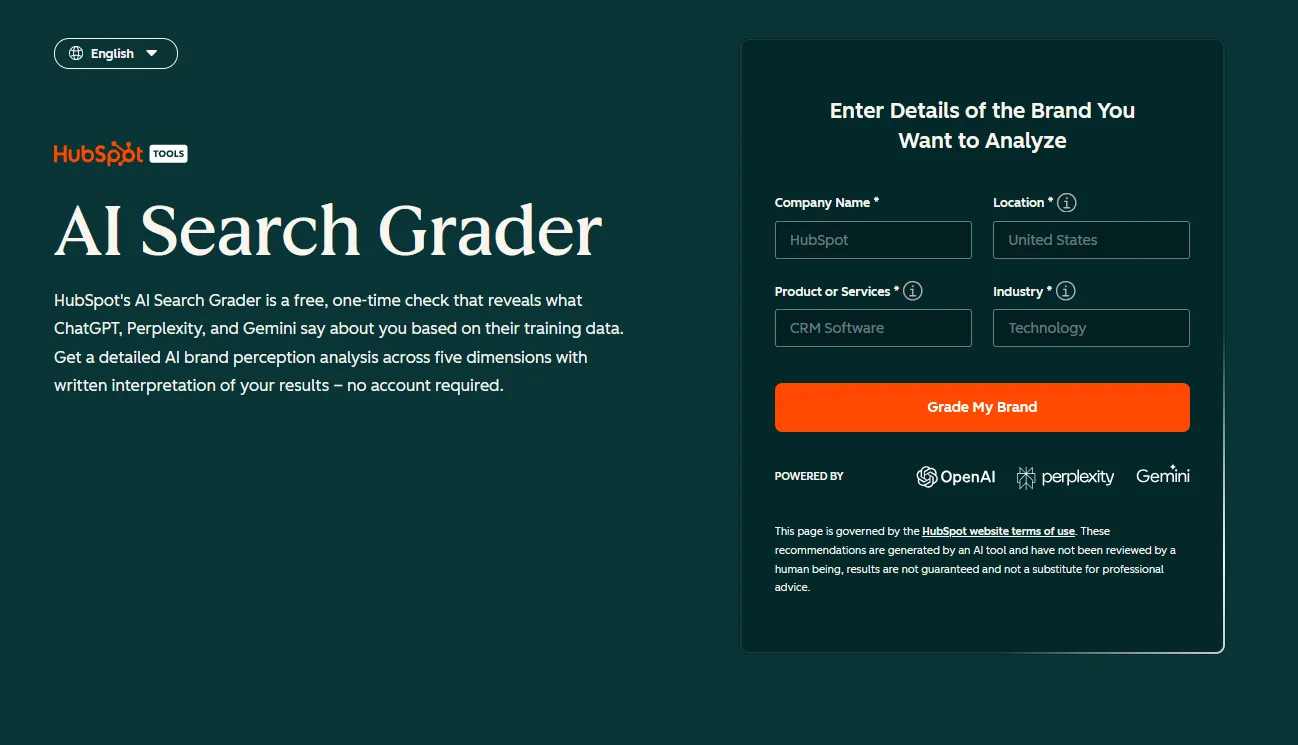
For a fast starting point, HubSpot's AI Search Grader checks how AI platforms talk about your brand and how you compare with competitors. It is free, takes a few minutes and makes a useful screenshot for a first conversation with leadership.
Tip: Run it for a prospect before a sales call to show where they stand in AI answers.
Best for checking AI mentions without a paid plan
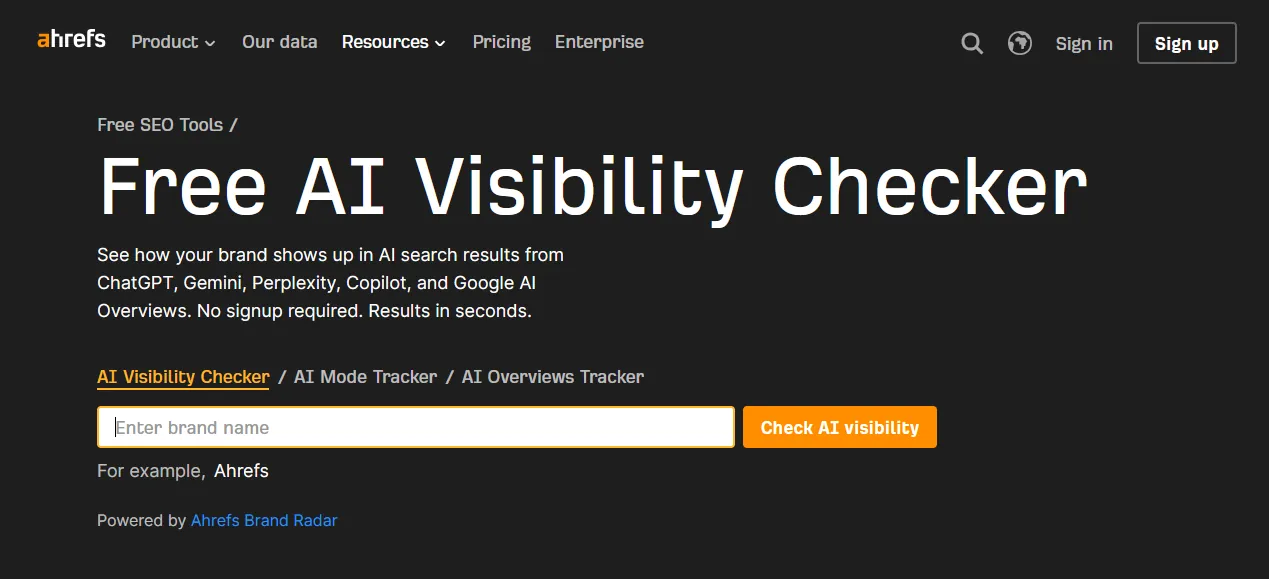
Ahrefs offers a free AI visibility checker that shows how often your brand appears in AI answers. It is a lighter version of Ahrefs' paid tracking, and a sensible way to test the waters before you commit to a tool.
Tip: Use it for quick spot checks on brand mentions before recommending a paid tracker.
Best for a quick check across ChatGPT, Perplexity and Gemini
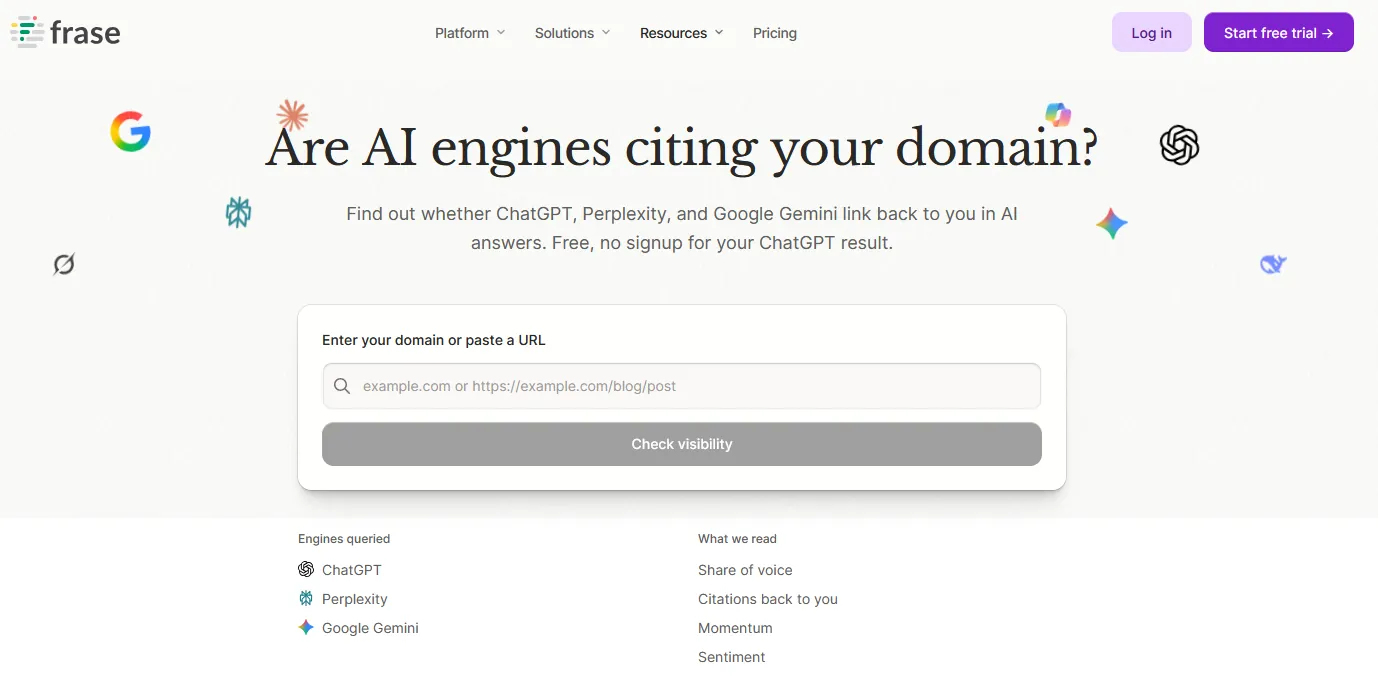
Frase's AI Visibility Checker runs a quick visibility and citation check across ChatGPT, Perplexity and Gemini. The free snapshot uses a small number of phrases, and an email unlocks more engines.
Tip: Use it as a second free snapshot next to Ahrefs' checker, then compare what each tool finds.
Best for seeing which B2B software brands AI recommends in your category
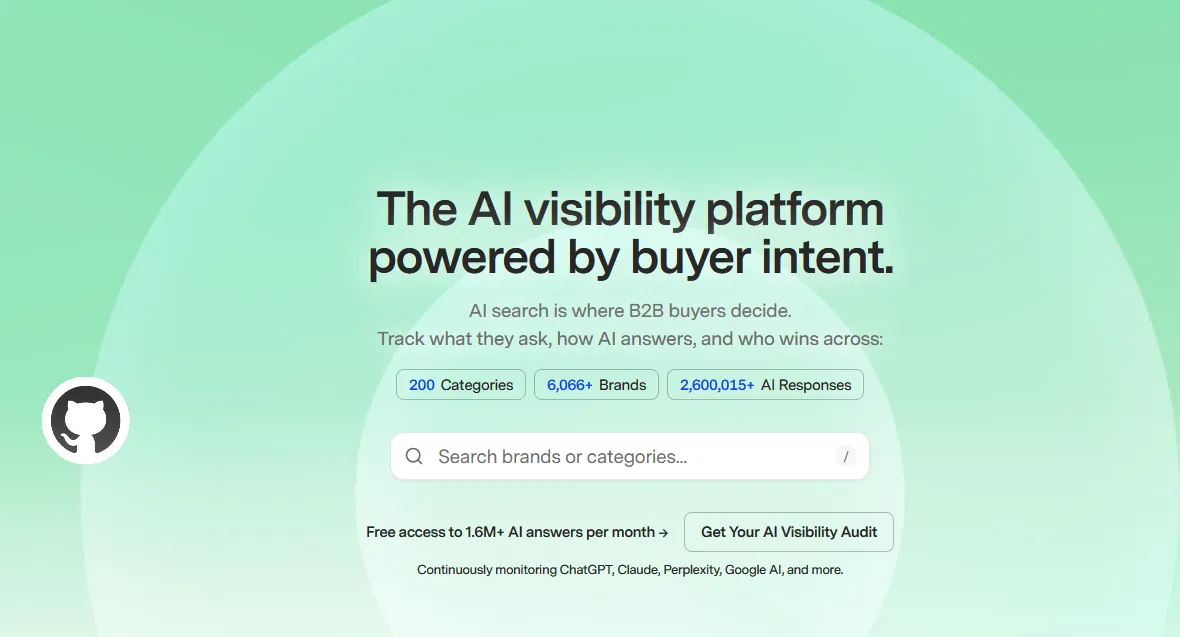
CheckThat is GrowthX's AI visibility platform, and its core is free. It tracks how ChatGPT, Claude, Perplexity and Google AI answer buyer questions across about 200 B2B software categories, using a shared prompt library that a person reviews. You can look up your category, see which brands AI recommends and check where you stand without building your own prompt set.
Tip: Find your software category, note who AI recommends ahead of you, then study the sources those answers cite.
Best for a quick readiness score for ChatGPT, Gemini, Claude and Perplexity
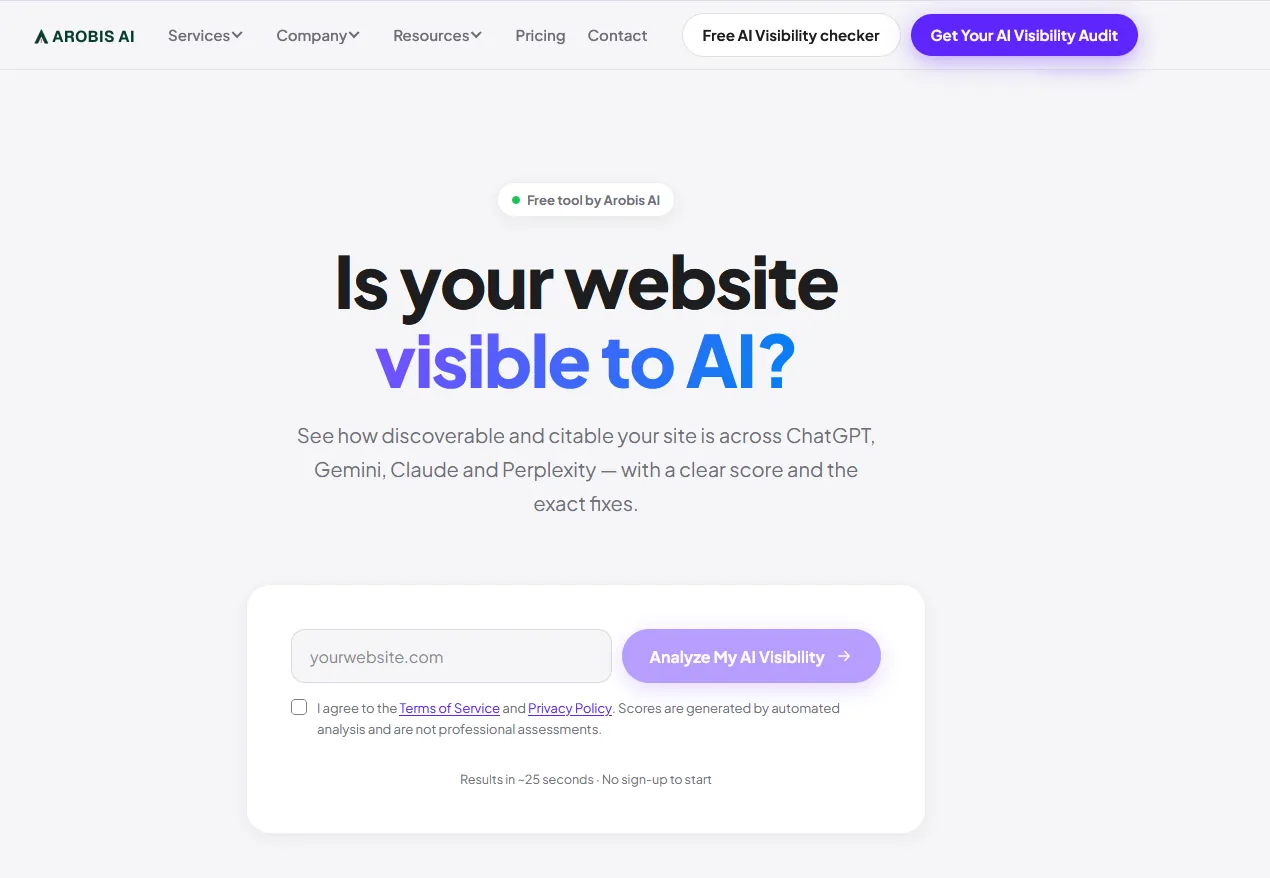
The Arobis AI Visibility Checker scores how ready your site is to be found and cited by ChatGPT, Gemini, Claude and Perplexity. It checks AI crawler access, structured data, page structure, brand signals, llms.txt and technical health, then gives a score out of 100 in about 25 seconds with no signup. The full fix plan sits behind a short contact form. Arobis also offers Arobis Lens, a free Chrome extension that shows how often AI tools recommend the brand on the page you are viewing.
Tip: Run it on your site and two competitors, fix the crawler and schema gaps first, then check again.
Best for tracking Google AI Overviews by keyword
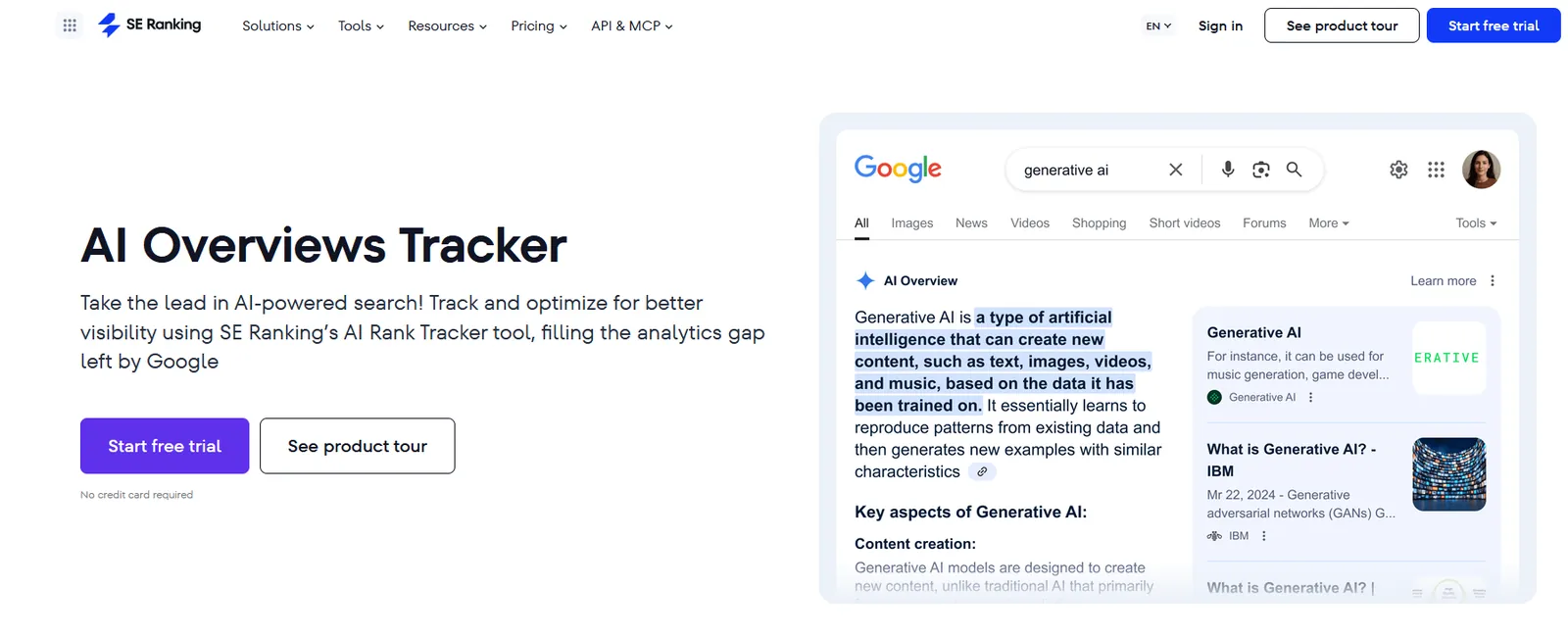
SE Ranking's AI Overviews Tracker shows which keywords trigger AI Overviews, which URLs get cited and which competitors appear, by country and device. It gives five free checks a day, with paid tracking beyond that.
Tip: Check your top keywords to see where AI Overviews appear and whether your pages are among the cited sources.
Best for hands-on prompt testing and before-and-after checks
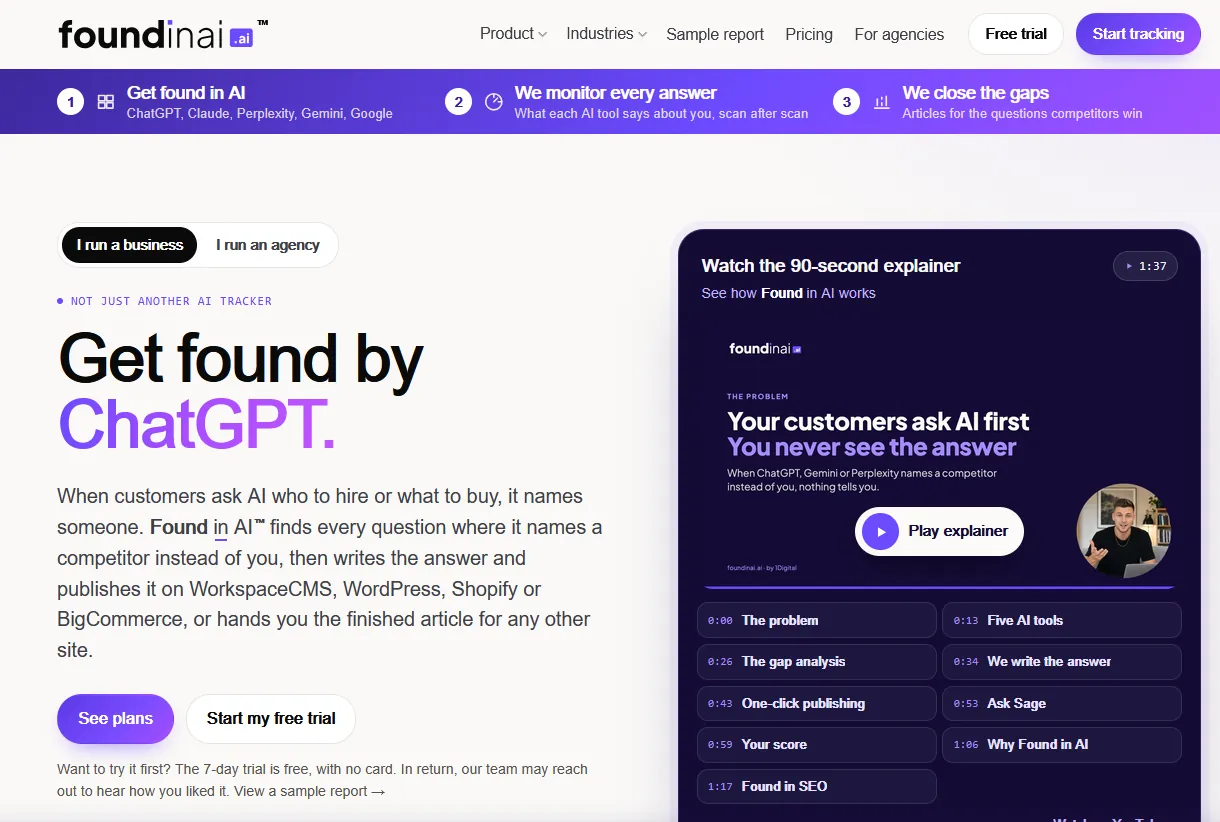
Found in AI runs a free scan about once a month to show whether AI tools name you, which competitors they name instead and where the gaps are. Paid plans add ongoing monitoring.
Tip: Run a scan before and after a content refresh to see whether the changes moved anything.
Best for seeing which brands AI models connect to your topics, and testing edits that win citations
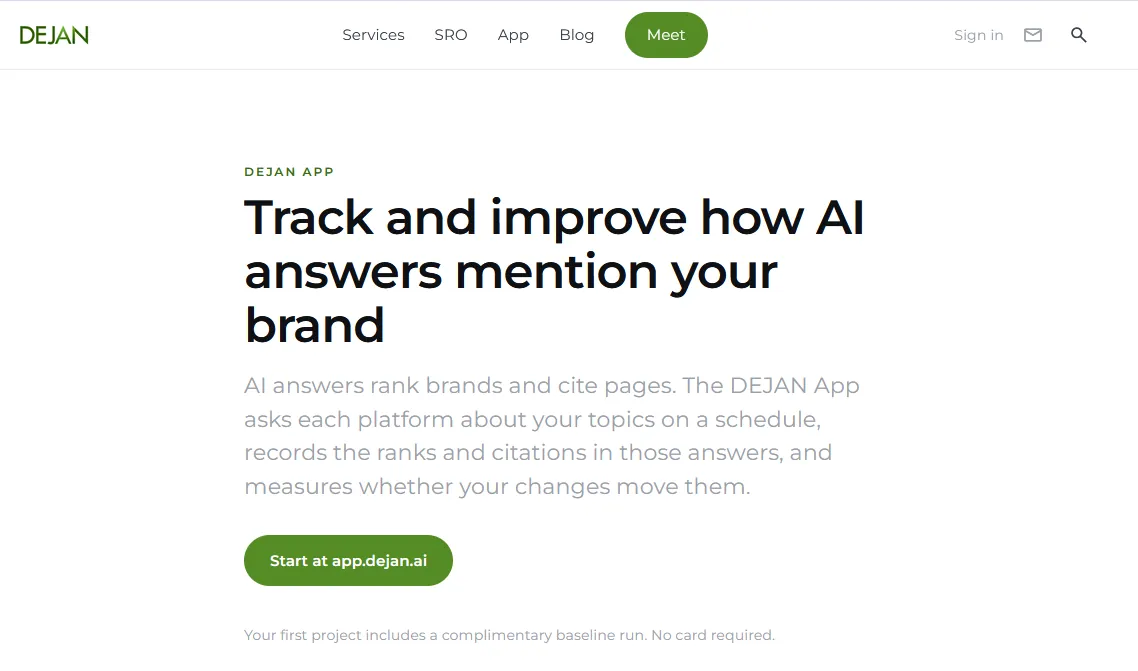
The DEJAN App from Dan Petrovic's agency tracks how Google, OpenAI and Anthropic models rank your brand and cite your pages. It also tests page edits against an AI ranker so you keep only the changes that move you up. Your first project gets a free baseline run with no card, and after that you pay for the tokens you use. DEJAN also shares free single-purpose tools, such as a query fan-out generator and an AI bot tester, on its tools page.
Tip: Run the free baseline on your most important topics first, then decide whether ongoing tracking is worth paying for.
Paid platforms, most with a free trial.
Best for teams that already use Ahrefs for SEO
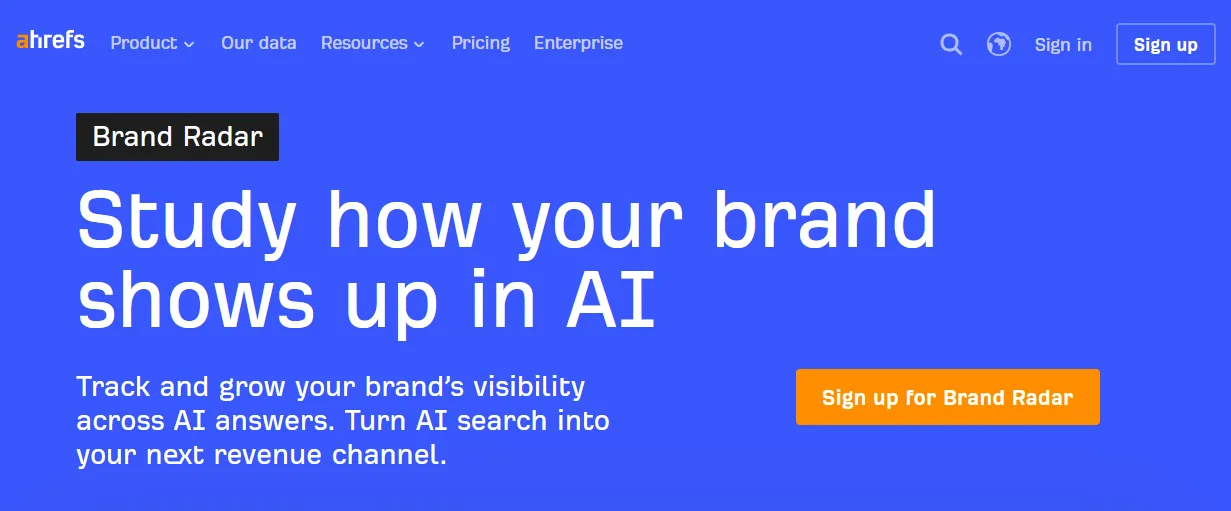
Brand Radar tracks brand mentions and citations across AI platforms and search, and compares your share of voice with competitors. It sits inside Ahrefs, so it suits teams who already pay for the SEO suite.
Tip: Track share of voice against competitors over time and report it monthly.
Best for teams that already use Semrush for SEO
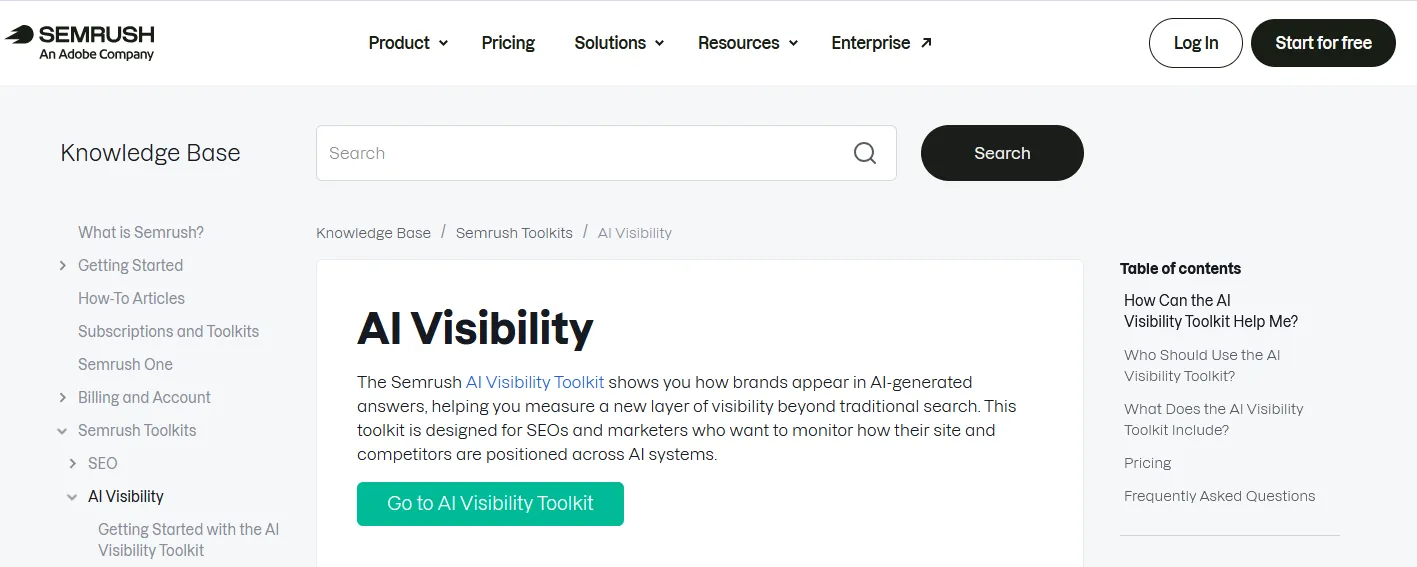
Semrush's AI Visibility Toolkit tracks how your brand shows up in AI answers, which prompts mention you and which sources AI tools cite. The knowledge base article explains what each report does before you buy.
Tip: Use it to find which prompts mention competitors but not your client, then target those gaps.
Best for enterprise teams tracking AI visibility at scale
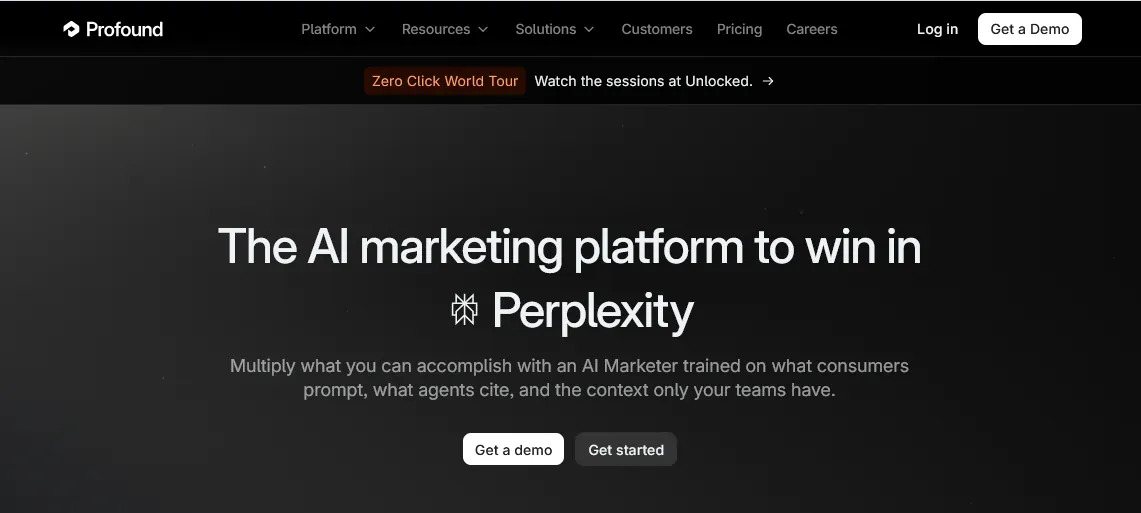
Profound is one of the best-known enterprise platforms for AI search visibility, covering mentions, citations, sentiment and the prompts buyers use. Pricing is aimed at larger teams.
Tip: Use it for large brands that need detailed tracking across many prompts, regions and platforms.
Best for mid-sized teams that want daily AI visibility tracking
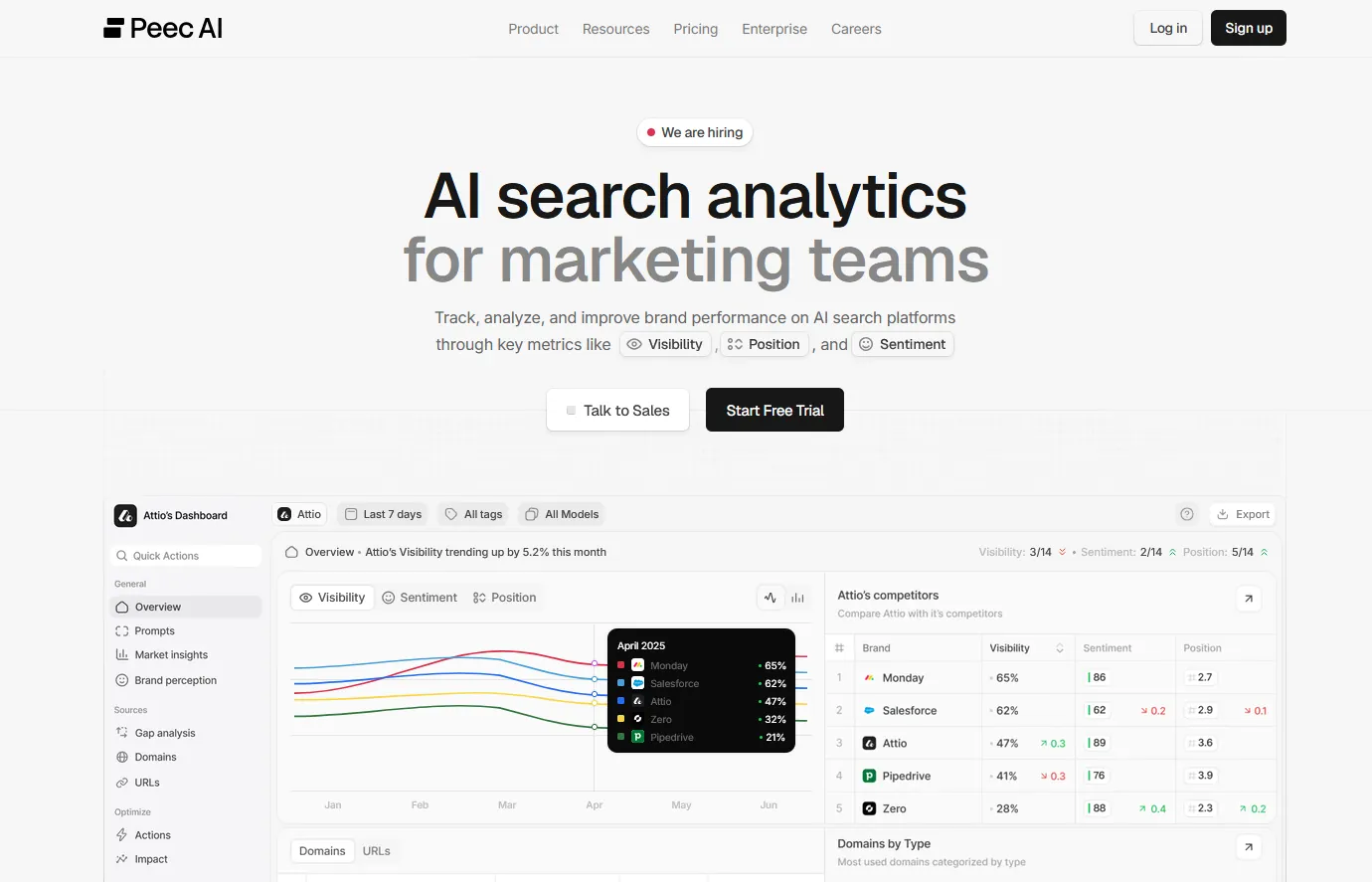
Peec AI tracks your visibility, position and sentiment across ChatGPT, Perplexity, Google AI Overviews and other AI platforms, with competitor benchmarks and source analysis.
Tip: Use it to track visibility and sentiment daily and to see which sources AI tools cite for your topics.
Best for small teams and agencies on a tighter budget
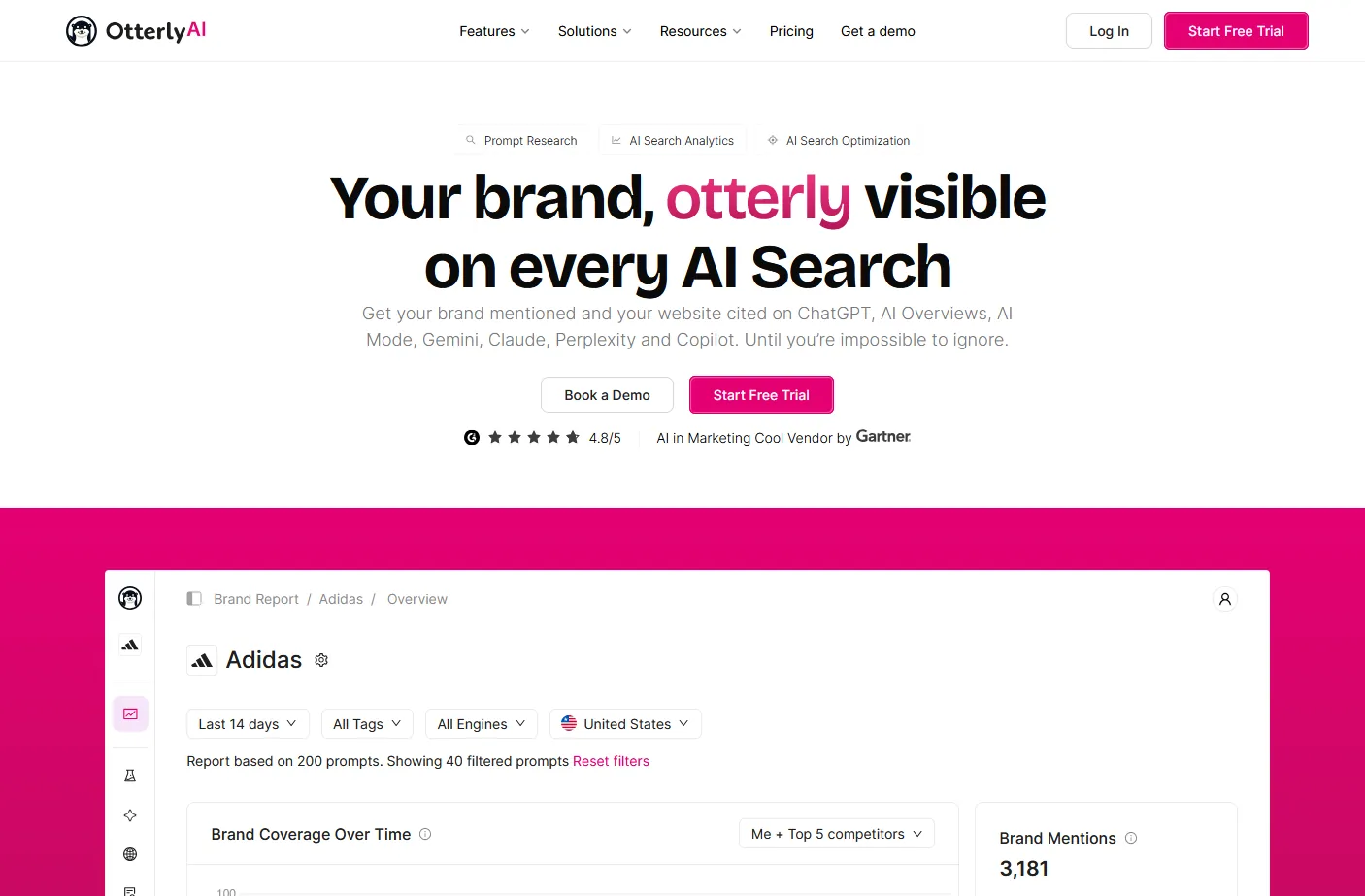
Otterly.AI monitors brand mentions and website citations across AI search platforms, and is often recommended as a more affordable option for smaller teams and agencies.
Tip: Use it for affordable monitoring of a small prompt set across several AI platforms.
Best for connecting prompts, citations and AI-referred traffic
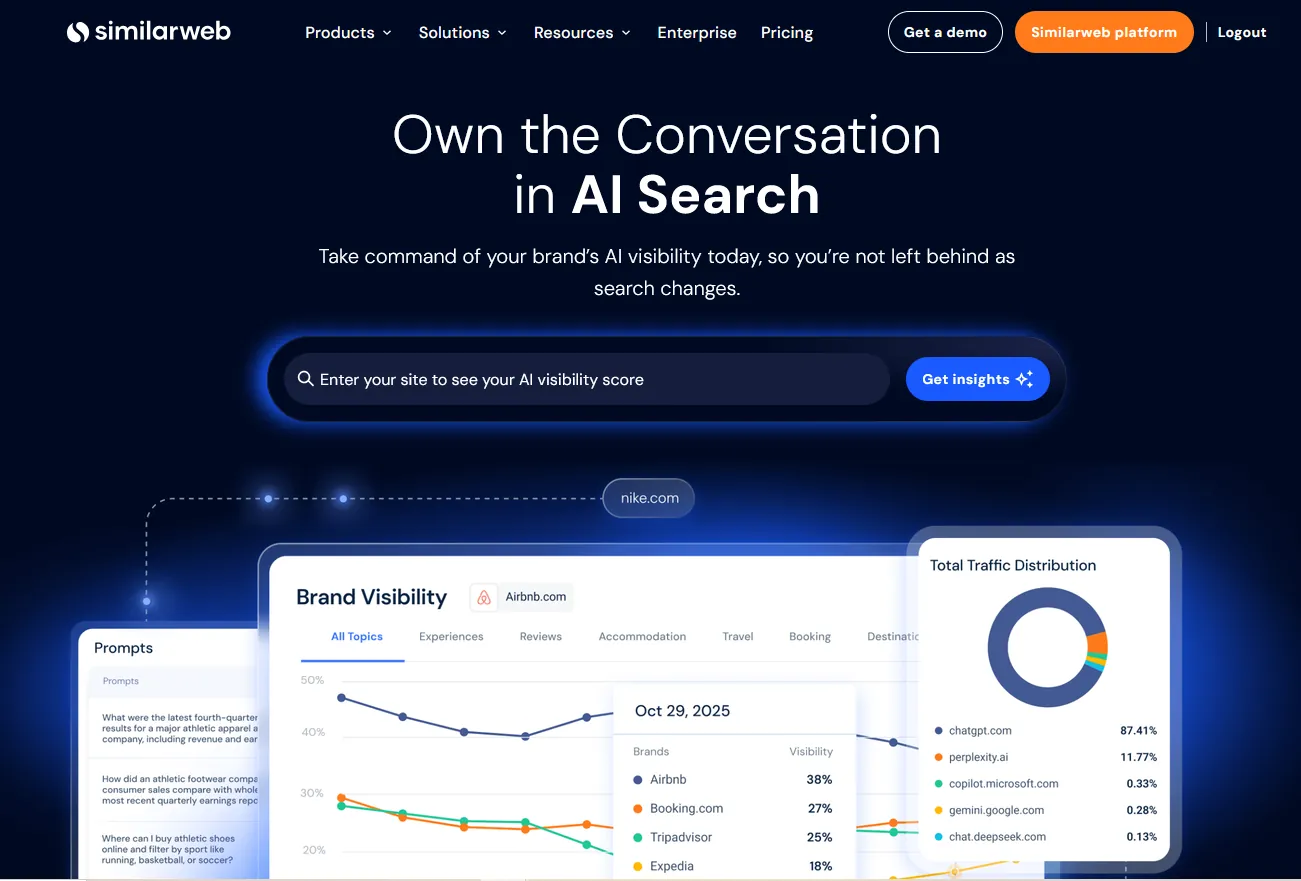
Similarweb AI Search Intelligence connects real-user prompts, AI answers, citations, sentiment and competitor visibility with the traffic AI platforms send to websites. Its figures are estimates, so review the methodology before treating them as exact.
Tip: Use it to show leadership how AI answers turn into visits, and which competitors gain the most AI traffic.
Best for broad multi-engine tracking on a credit budget
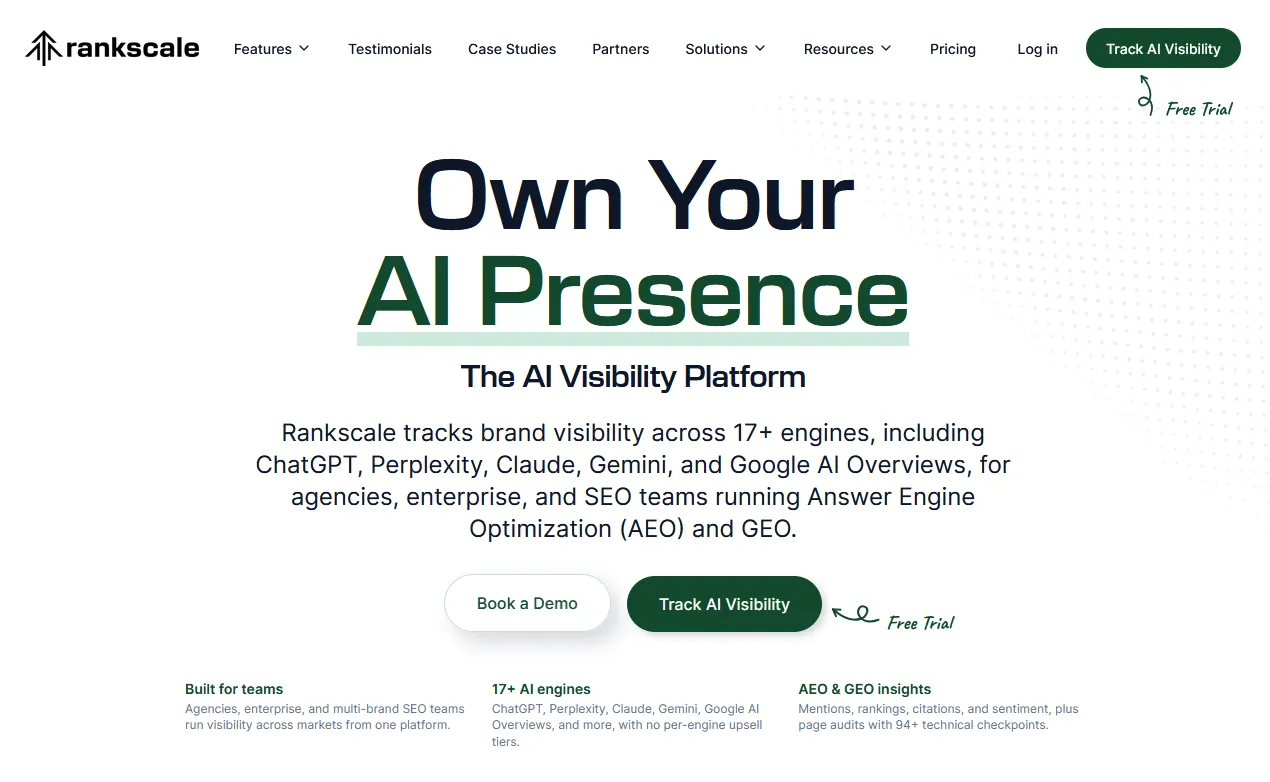
Rankscale tracks brand visibility and citations across many AI engines, with fan-out, page audits, exports and agency dashboards. It runs on credits, so plan your prompt volume before you commit.
Tip: Use it for agency reporting across several clients and AI engines in one dashboard.
Best for funnel-stage visibility and AI agent experience
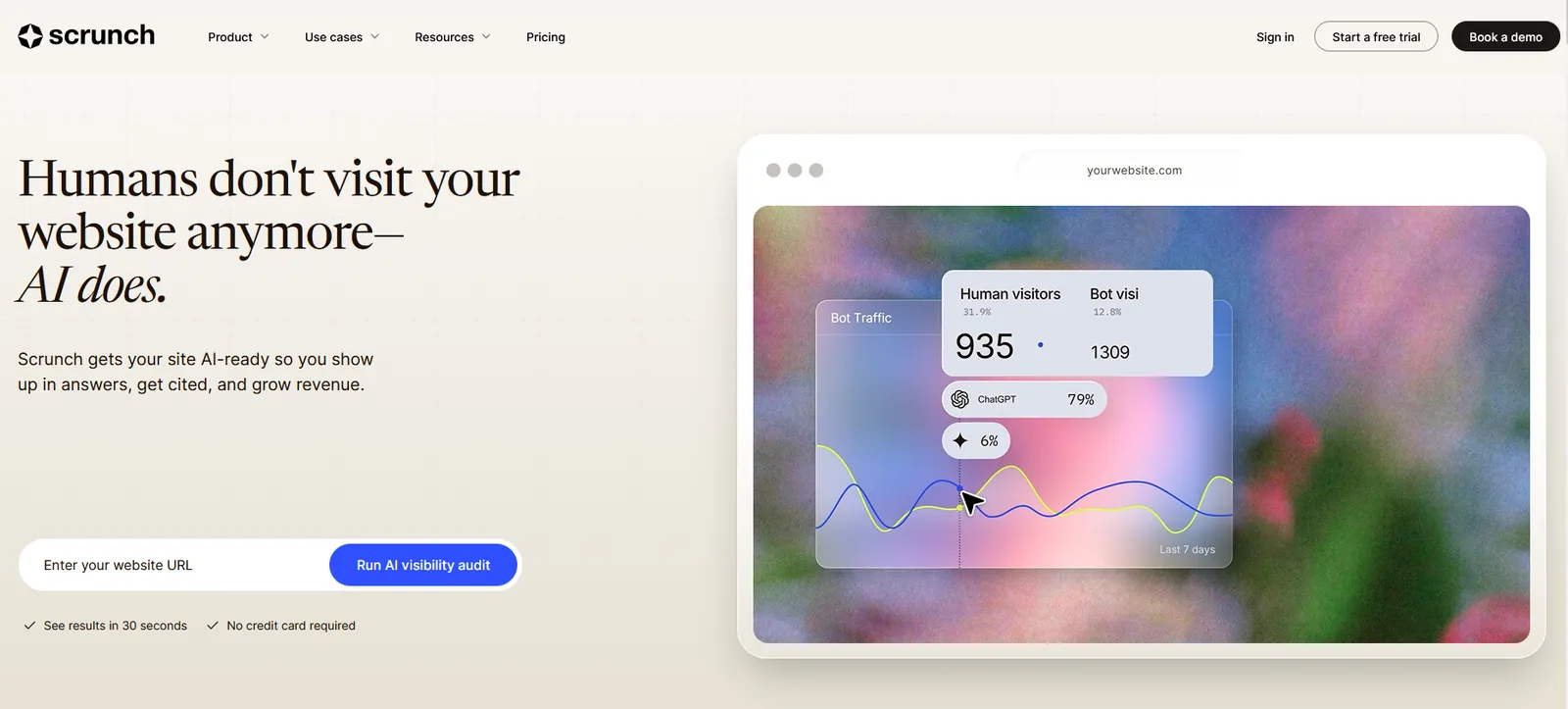
Scrunch tracks prompts, competitors, citations and sentiment by funnel stage, and audits how AI agents experience your site. It offers a seven-day trial before paid plans.
Tip: Use it to see where you lose visibility between awareness and purchase-stage prompts.
Best for agencies tracking AI visibility for several clients on one plan
Traqer is the AI visibility tracker built by the content agency Grow and Convert. It tracks topics instead of single prompts, asking ChatGPT, Copilot, Gemini, AI Overviews and AI Mode several versions of the same buying question every week, then shows which brands and pages each one recommends. Plans start at $25 a month with unlimited brands and users, Claude and Perplexity are paid add-ons, and there is a free trial.
Tip: Group your prompts into buying topics, then use the cited pages it lists as your outreach and content list.
Best for monitoring AI answers across many engines, with every number traced back to the answer
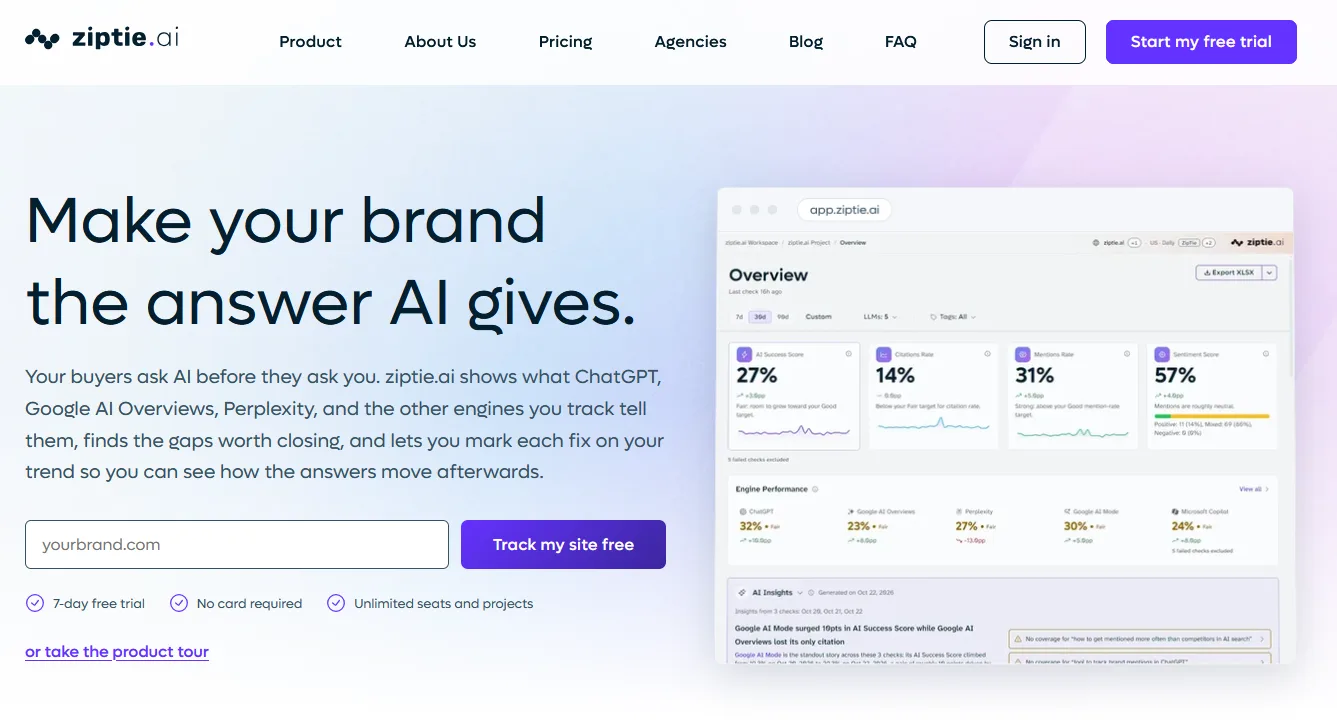
ZipTie tracks what ChatGPT, Google AI Overviews, Perplexity and other AI engines say about your brand. Every metric opens the answers behind it, so you can see the exact wording and sources rather than a score alone. Pricing depends on how many prompts you track, which engines you turn on and how often they run.
Tip: Start with a small set of buying prompts on the two engines your customers use most, then add engines once you know which answers matter.
Best for keyword-led tracking across many AI engines
LLMrefs tracks keywords across ChatGPT, Google's AI features, Gemini, Perplexity, Claude, Grok, Copilot, Meta AI and DeepSeek. It suits SEO teams who want to start from a keyword list.
Tip: Load your priority keywords and track which AI engines cite you for each one.
Official documentation and communities worth bookmarking.
Best for measuring citations in Microsoft's AI answers
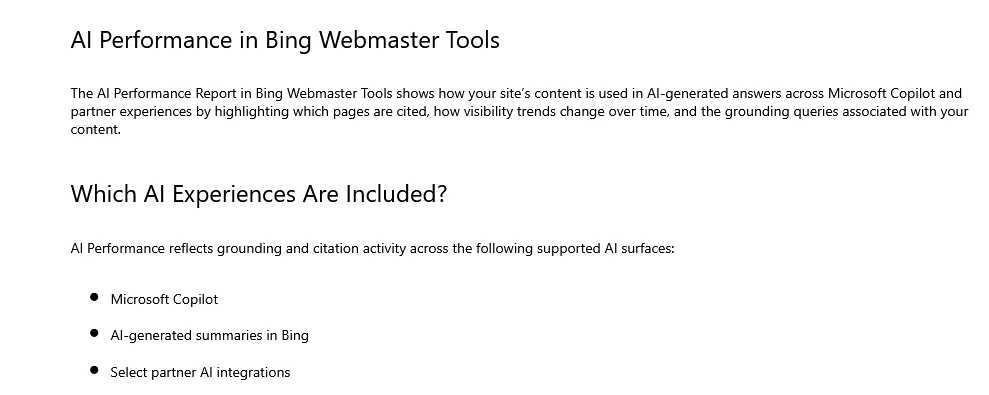
First-party data on AI citations is rare, which makes Bing's AI Performance report worth setting up early. Inside Bing Webmaster Tools it shows citations, grounding queries, cited pages and trends, with exports. A verified site is required.
Tip: Verify the site, then export cited pages and grounding queries monthly as first-party proof of AI visibility.
Best for monthly AI search trends and free prompt tracking
Promptwatch is an AI search visibility platform that lets you track up to 10 prompts for free, and publishes a monthly State of AI Search report on how AI platforms are changing.
Tip: Track up to 10 prompts on the free plan, and read the monthly State of AI Search report for trends.
An AEO tool checks how AI assistants and AI search features answer questions in your category, and whether your brand is mentioned, recommended or cited as a source. Most track a set of prompts over time so you can see changes.
Yes. HubSpot's AI Search Grader, the Ahrefs Free AI Visibility Checker, Frase's checker, CheckThat and Arobis are free, and Bing Webmaster Tools reports AI citations at no cost. Free tools give a snapshot; paid platforms track the same prompts over time.
Start with 20 to 50 prompts that match real buying questions, grouped by topic. Tracking hundreds of loosely related prompts makes reports harder to read without making them more accurate.
Start with two free checkers, write down your 20 most important buying prompts, then decide whether you need a paid tracker. The prompts matter more than the platform.
If you want a quicker read on your own brand, my free tools can help:
This guide is part of The AI Search Stack, my list of the best free and paid resources for SEO, AEO and GEO.
I will check how your brand shows up in Google and AI answers today, and show you what to fix first.